
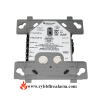


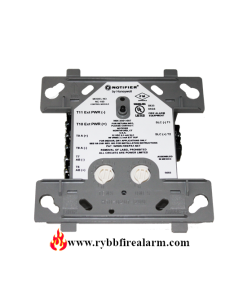
Notifier FZM-1 Addressable Zone Interface Module
$115.00
Notifier FZM-1 addressable interface module for monitoring compatible two-wire 24 VDC conventional smoke detectors with Class A or Class B IDC support, FlashScan addressing, external power supervision, and LED status indication.
28 in stock

he Notifier FZM-1 is an intelligent addressable interface module designed to connect compatible conventional two-wire smoke detectors to a NOTIFIER addressable fire alarm system. The module monitors and supervises one complete zone of compatible 24-volt, two-wire smoke detectors and communicates the zone condition back to the fire alarm control panel.
The module reports the condition of its Initiating Device Circuit and can identify normal, open, and alarm conditions at the control panel.
Product Functions
- Interfaces compatible conventional two-wire smoke detectors with an addressable NOTIFIER fire alarm system
- Monitors one conventional smoke detector zone
- Supports compatible 24 VDC two-wire smoke detectors
- Supports Class B / NFPA Style B initiating circuits
- Supports Class A / NFPA Style D initiating circuits
- Supervises initiating device circuit wiring
- Supervises the connection of the external power source
- Reports circuit condition to the fire alarm control panel
- Uses one address on the SLC loop
- Supports FlashScan and CLIP addressing ranges
- Uses built-in rotary address switches
- Provides panel-controlled LED status indication
- Offers high EMF/RFI noise immunity
- Uses SEMS terminals with clamping plates for field wiring
- Can replace the older MMX-2 module in applicable existing systems
Rotary Addressing
The Notifier FZM-1 uses built-in rotary switches for device addressing.
The installer selects the required SLC address directly on the module using separate rotary controls for the tens and ones positions. This allows the FZM-1 to be individually identified by the compatible NOTIFIER fire alarm control panel.
Care must be taken to prevent duplicate addresses on the same system.
Detector Reset Operation
Two-wire conventional smoke detectors normally require power interruption to reset after an alarm condition.
NOTIFIER’s FZM-1 installation diagram specifies that power supplied to the interface module must be externally switched to reset the connected detectors. Allows the fire alarm system to remove detector power temporarily and restore the conventional detection circuit after the alarm condition has been cleared.
Electrical Specifications
The FZM-1 electrical specifications published by NOTIFIER include:
Normal Operating Voltage: 15–32 VDC
Maximum Current Draw: 5.1 mA with LED on
Average Operating Current: 270 µA with one communication and one LED flash every five seconds
Maximum IDC Wiring Resistance: 25 Ω
End-of-Line Resistance: 3.9 kΩ
External Detector Supply: 24 VDC power limited
Maximum External Supply Ripple: 0.1 Vrms
Maximum External Supply Current: 90 mA per module
Physical Dimensions
The FZM-1 is a standard-size addressable module.
Height: 4.5 in / 11.43 cm
Width: 4.0 in / 10.16 cm
Depth: 1.25 in / 3.175 cm
The module is designed to mount to a standard 4-inch square electrical box with a minimum depth of 2.125 inches.
Installation Information
The FZM-1 mounts directly to a standard 4-inch square electrical box. The module is secured to the electrical box after field wiring and device addressing have been completed.
Field wiring includes:
- SLC input and output connections
- Conventional two-wire detector circuit
- External regulated 24 VDC detector supply
- 3.9 kΩ end-of-line resistor
- Optional connections to additional interface modules where permitted
NOTIFIER recommends twisted-pair wiring for the SLC in its installation diagrams and requires terminal wiring associated with the module to be power limited. Wiring must comply with applicable codes, ordinances, system drawings, and manufacturer’s instructions.
Testing & Maintenance
Testing should confirm:
- Correct FZM-1 address at the fire alarm control panel
- Communication between the module and SLC
- Normal circuit supervision
- Alarm recognition from compatible smoke detectors
- Open-circuit trouble recognition
- Correct LED operation
- External 24 VDC power availability
- Power supply supervision
- Correct Class A or Class B wiring configuration
- Proper 3.9 kΩ EOL resistor installation
Inspection and service procedures should follow the applicable NOTIFIER installation documentation, compatible detector instructions, local requirements, and the maintenance procedures established for the fire alarm system.
Protection & Applications
Suitable applications include:
- Commercial Fire Alarm Systems
- Intelligent Addressable Fire Alarm Systems
- Conventional Smoke Detector Integration
- Two-Wire Smoke Detector Zones
- Existing System Retrofits
- Addressable-to-Conventional Interface Applications
- Class A Initiating Device Circuits
- Class B Initiating Device Circuits
- Office Buildings
- Hospitals and Healthcare Facilities
- Schools and Universities
- Hotels
- Government Buildings
- High-Rise Buildings
- Industrial Facilities
- Warehouses
- Institutional Buildings
- Commercial Life Safety Systems
| Weight | 2 lbs |
|---|---|
| Dimensions | 5 × 5 × 5 in |
Vendor Information
- Store Name: Miami
- Vendor: Miami
-
Address:
7713 NW 46 Street
Doral, FL 33166 - No ratings found yet!
Related products
Intelligent Modules
Intelligent Modules
Intelligent Modules

Intelligent Modules
Intelligent Modules
Intelligent Modules
Intelligent Modules
Intelligent Modules