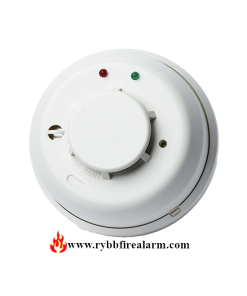



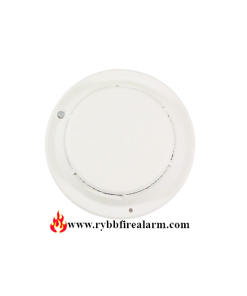
The Edwards KIR-OSD Intelligent Optical Smoke Detector is an addressable photoelectric detector designed for compatible Kidde/Edwards intelligent fire alarm systems. It uses multiple optical sensors, dual optical wavelengths, and multiple detection angles to distinguish actual smoke particles from common nuisance sources such as cooking particulates.
An onboard microprocessor analyzes the optical sensor information using digital filtering before making an alarm decision. The detector also provides continuous self-diagnostics, environmental compensation, sensitivity adjustment, dirty-detector warnings, and non-volatile memory.
Product Functions
- Provides intelligent addressable smoke detection
- Uses advanced optical/photoelectric sensing
- Uses multi-criteria particle analysis
- Helps reject nuisance alarms from cooking particulates
- Provides five sensitivity settings
- Provides twenty pre-alarm settings
- Provides two levels of environmental compensation
- Provides two levels of dirty-detector warning
- Supports automatic day/night sensitivity adjustment
- Stores detector information in non-volatile memory
- Provides rotary device addressing
- Provides green/red status LED indication
- Supports multiple compatible detector bases
- Provides continuous self-diagnostics
- Supports sensitivity reporting through compatible control equipment
Multi-Criteria Optical Detection
The KIR-OSD uses a patented multi-criteria optical sensing system.
Instead of relying on a single photoelectric measurement, the detector collects information from multiple optical sensors using:
Dual optical wavelengths
and
Multiple detection angles.
The detector analyzes the characteristics of airborne particles and uses digital filtering to distinguish smoke associated with a fire from particles more typical of nuisance sources.
Nuisance Alarm Rejection
A key feature of the KIR-OSD is its ability to reduce unwanted alarms caused by common non-fire sources.
The detector’s onboard processor analyzes optical information and filters patterns associated with nuisance particles, including general cooking particulates.
This makes the detector particularly useful in applications where conventional photoelectric detectors may be exposed to intermittent airborne particles that do not represent an actual fire.
Smoke Sensitivity
The manufacturer publishes a smoke obscuration range of:
0.5–4.36%/ft
or
1.6–13.6%/m.
The detector provides:
Five sensitivity settings
and
Twenty pre-alarm settings.
Available sensitivity and pre-alarm functions can depend on the capabilities of the connected fire alarm control system.
Environmental Compensation
The KIR-OSD provides:
Two levels of environmental compensation.
Environmental compensation allows the detector to adjust for gradual changes in its sensing chamber caused by normal environmental conditions or contamination.
This helps maintain reliable sensitivity over the detector’s service life while reducing unnecessary maintenance and unwanted alarms.
Dirty Detector Warning
The KIR-OSD provides:
Two levels of dirty-detector warning.
These maintenance indications allow compatible fire alarm control equipment to identify detector contamination before it significantly affects performance.
The detector’s self-diagnostic information is stored in non-volatile memory, allowing important maintenance information to remain available even after power interruptions.
Rotary Addressing
The KIR-OSD uses two rotary switches on the rear of the detector for address selection.
The manufacturer specifies:
Address Range: 1–125.
One rotary switch establishes the tens/hundreds portion of the address, while the second establishes the ones digit. The installation sheet shows, for example, how the switches are positioned to create address 52.
This allows technicians to establish the detector address directly without requiring a separate handheld addressing tool.
Status LED
The detector incorporates a bi-color green/red LED.
Published operation is:
Normal: Green LED flashes
Alarm/Active: Red LED flashes.
The LED provides immediate local indication of communication and alarm status.
Automatic Day/Night Sensitivity
The KIR-OSD supports automatic day/night sensitivity adjustment.
When supported by the connected control system, different detector sensitivity levels can be applied according to building occupancy or operating schedules.
This provides additional flexibility for locations where environmental conditions vary significantly between occupied and unoccupied periods.
Compatible Detector Bases
The KIR-OSD supports several base configurations, including:
KI-SB4 — Standard Base
KI-RB4 — Relay Base
KI-IB4 — Fault Isolator Base
KI-ABLT — Audible Base
KI-ABST — Audible Base.
This allows the same detector technology to be adapted to applications requiring standard detection, auxiliary relay operation, circuit isolation, or local audible signaling.
Electrical Information
Published manufacturer specifications identify:
Operating Voltage: 15.2–19.95 VDC.
The detector receives operating power and communicates with the fire alarm control panel through the compatible intelligent signaling line circuit.
Because the KIR-OSD is an intelligent device, its alarm condition and diagnostic information are communicated digitally rather than through a conventional standalone alarm contact.
Duct Detection Capability
The KIR-OSD can also be used for appropriate duct smoke detection applications when installed with the:
KI-DMP — Duct Detector Mounting Plate.
The manufacturer specifies a duct air velocity range extending up to:
4,000 ft/min / 20.32 m/s.
Duct installations must follow the dedicated KI-DMP installation documentation.
Installation Information
Installation begins by wiring and installing the appropriate compatible detector base.
The technician then sets the KIR-OSD’s address using the two rotary switches on the rear of the detector. The detector head attaches to the base by rotating it clockwise until it locks into position.
The supplied dust cover should remain installed during appropriate construction conditions and must be removed before the detector is placed into service. The manufacturer cautions that detectors should not normally be installed until final construction cleanup has been completed unless otherwise required by the authority having jurisdiction.
| Weight | 1 lbs |
|---|---|
| Dimensions | 5 × 5 × 5 in |
Vendor Information
- Store Name: Miami
- Vendor: Miami
-
Address:
7713 NW 46 Street
Doral, FL 33166 - No ratings found yet!
Related products
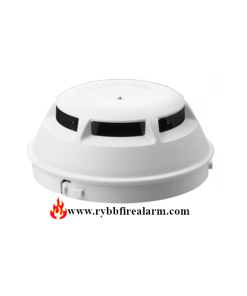
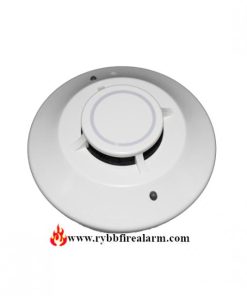
Detectors
Detectors
Detectors