
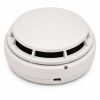
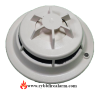

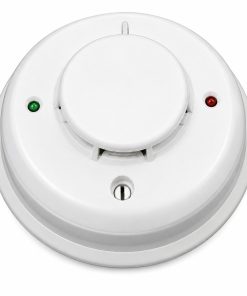
Siemens ILI-1 Smoke Detector P/N:500-092725
$800.00
Siemens ILI-1 smoke detector with ionization sensing technology, addressable communication, onboard microprocessor, programmable addressing, and commercial fire alarm applications.
2 in stock

The Siemens ILI-1 is an addressable smoke detector designed to provide dependable fire detection in commercial fire alarm systems. Utilizing ionization sensing technology, it provides rapid detection of fast flaming fires while continuously communicating with compatible Siemens fire alarm control panels for enhanced system supervision.
The detector incorporates an onboard microprocessor, programmable electronic addressing, automatic environmental compensation, and advanced diagnostic capabilities. Its plug in design simplifies installation, testing, and maintenance while providing dependable performance in commercial life safety applications.
Product Functions
- Detects smoke using ionization sensing technology
- Reports alarm conditions to the fire alarm control panel
- Continuously monitors detector status
- Performs automatic environmental compensation
- Supports programmable electronic addressing
- Provides visual alarm indication
- Performs continuous self supervision
- Supports electronic functional testing
- Supports maintenance diagnostics
Electrical & System Information
The ILI-1 operates on Siemens MXL, IXL, and XL3 addressable signaling circuits using two wire communication. An onboard Motorola microprocessor continuously supervises detector operation while performing advanced error checking, environmental compensation, and communication with the control panel.
The detector is programmable using Siemens field programming equipment, allowing electronic addressing and functional testing before installation. High resistance to radio frequency interference, electromagnetic interference, and humidity contributes to dependable long term operation.
Features
The ILI-1 features ionization sensing technology, addressable communication, onboard microprocessor control, programmable electronic addressing, automatic environmental compensation, advanced diagnostics, electronic functional testing, high resistance to radio frequency interference, high resistance to electromagnetic interference, humidity compensation, plug in installation, and dependable commercial fire alarm performance.
Mounting & Design
The ILI-1 installs onto a compatible Siemens detector base using a twist lock mounting arrangement that allows installation, inspection, testing, and replacement without disturbing field wiring.
Its compact housing incorporates dual ionization chambers and solid state electronics designed to provide stable operation while reducing the effects of changing environmental conditions.
Protection & Applications
Suitable for:
- Commercial Fire Alarm Systems
- Office Buildings
- Hospitals
- Healthcare Facilities
- Schools and Universities
- Hotels
- Government Buildings
- Industrial Facilities
- Warehouses
- Manufacturing Plants
- Institutional Facilities
- Indoor Fire Detection
| Weight | 1 lbs |
|---|---|
| Dimensions | 6 × 6 × 6 in |
Vendor Information
- Store Name: Miami
- Vendor: Miami
-
Address:
7713 NW 46 Street
Doral, FL 33166 - No ratings found yet!
Related products

Smoke Detector
Smoke Detector
Smoke Detector

Smoke Detector

Smoke Detector
Smoke Detector

Smoke Detector

Smoke Detector